Dryness, gumminess and crumbling are descriptions, not diagnoses. Each can arise from several interacting conditions. Before changing a formula, ask when the symptom appeared: immediately after baking, after cooling or the following day. The timing helps distinguish ingredient balance from incomplete baking and storage effects.
Water arrives through milk, eggs, fruit and other ingredients, not just an obvious liquid measure. Flour and starch absorb it, sugar influences its availability, and the baking process drives some of it away. Fat changes tenderness and the perception of moistness without performing exactly the same job as water.
1. Establish the dry baseline
Weigh the flour and use the specified type. Whole-wheat flour contains bran and other components that alter hydration and texture; it is not simply white flour with a darker colour. Even two all-purpose flours can differ in protein content and absorption. Record the brand when you are investigating a recurring problem.
Check the rest of the dry ingredients too. Reducing sugar changes more than sweetness: it can affect tenderness, browning and moisture retention. Adding extra cocoa, oats or ground nuts introduces different absorption and structural effects. If several ingredients changed together, restore the original recipe before drawing conclusions.
2. Understand the wet mixture
Milk contributes water along with proteins and other solids. Yogurt brings acidity and a different concentration of solids; a thick strained yogurt is not equivalent to a pourable one. Fruit purée contains water, fibre, sugar and sometimes considerable acidity. Its behaviour varies with the fruit and the amount of processing.
Oil can help a muffin feel soft at room temperature because it remains liquid. Butter offers flavour and contains both fat and water, but it firms as it cools. Replacing one with the other by equal volume can change the formula in several ways. Use a recipe designed for your preferred fat before attempting broad conversions.
3. Bake for a set centre
Start with a fully preheated oven and, when possible, an independent oven thermometer. A dial setting is not a direct measurement of the temperature beside the pan. Dark metal can encourage faster exterior browning, while silicone and other materials change heat transfer. Match the recipe’s bakeware when establishing your baseline.
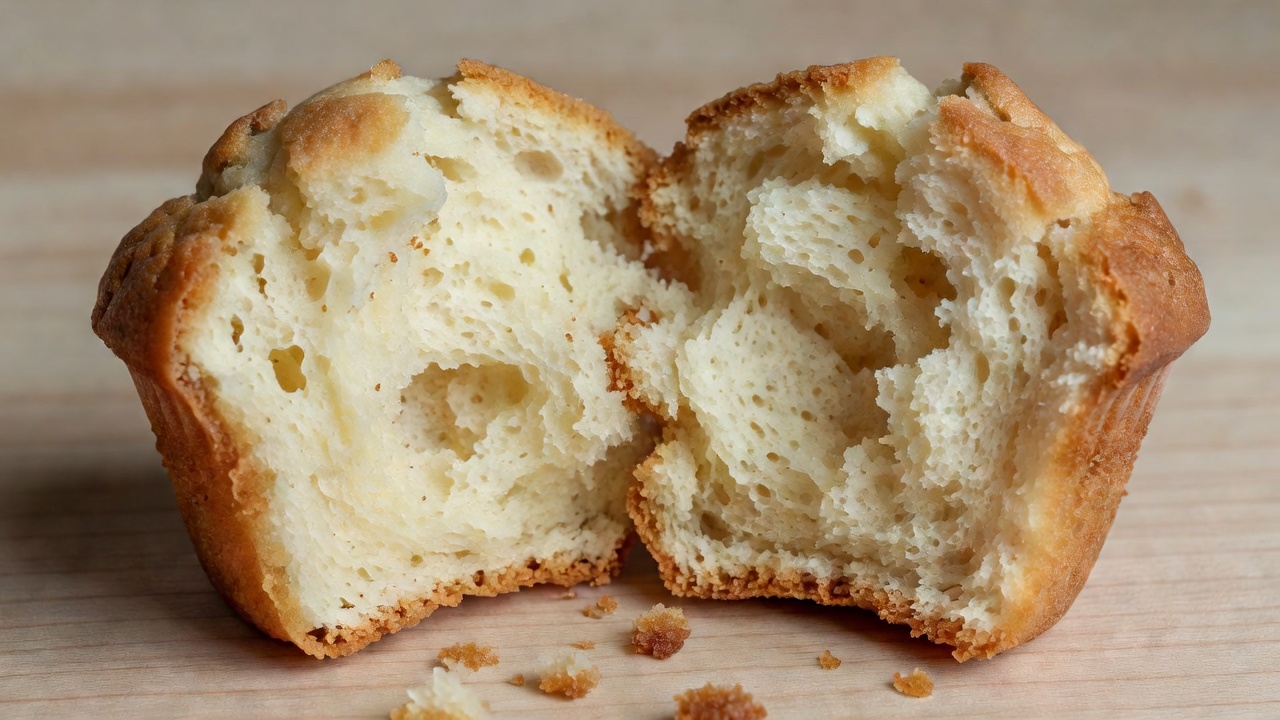
Near the expected finishing time, check several cues together: the top should look set, the centre should respond gently to touch, and a tester inserted into crumb rather than fruit should not carry raw batter. Melted chocolate and juicy fillings can confuse a tester. Follow recipe-specific temperature guidance if provided; there is no single internal temperature that defines every muffin formula.
If the surface becomes dark before the middle sets, review oven temperature, portion size and pan material. Do not immediately compensate by adding flour to the next batch. That may obscure a heat-transfer problem while producing a drier crumb.
4. Let cooling finish its work
Follow the recipe’s initial pan-rest instruction, then transfer muffins carefully to a rack when they are stable enough to handle. Leaving them in a hot pan for a long time can encourage trapped steam around the base. Moving them too early can break a delicate structure.
Do not seal warm muffins into a container. Condensation can soften toppings and leave surfaces sticky. Assess the texture after cooling, not while starches and fats are still changing. If you compare batches, use the same cooling interval so that temperature does not become another uncontrolled variable.
Protect the result
For plain muffins, use short-term covered storage once fully cool and freeze what you will not eat promptly. Storage needs depend on the ingredients and room conditions. Perishable dairy, custard or other sensitive fillings require appropriate refrigeration and recipe-specific food-safety guidance; a baked exterior does not make every filling shelf-stable.
Record day-one and next-day texture separately. If the crumb starts good and becomes dry, investigate storage and overbaking before increasing liquid. If it begins gummy, investigate setting and the distribution of wet additions. One carefully chosen adjustment is easier to interpret than an entirely rewritten recipe.