The conventional muffin method combines a dry mixture with a wet mixture shortly before baking. It differs from creaming butter and sugar, and it should not replace that method indiscriminately. Begin with a recipe written for this approach. Your first objective is repeatability: the same ingredient weights, pan, portion size and oven setting give your observations a useful frame of reference.
Wheat flour contains proteins that can form gluten when hydrated and worked. That structure helps a muffin hold its shape, but excessive development can contribute to a chewy bite. Fat, sugar, flour choice and liquid quantity all influence the result. “Do not overmix” is helpful only when you also know what adequate mixing looks like.
1. Prepare before combining
Preheat the oven fully and prepare the pan before bringing wet and dry ingredients together. Weigh your flour rather than compressing it into a cup. If measuring by volume is unavoidable, use the recipe author’s stated method. A scoop dragged through a flour container can collect substantially more flour than a lightly filled measure.
Whisk the flour, leavening, salt and dry spices thoroughly. Break up visible leavener lumps. Separately combine the wet ingredients until the egg is dispersed and the mixture looks reasonably uniform. For melted-butter recipes, follow the specified temperature guidance: very hot butter can affect eggs, while cold ingredients can encourage the butter to solidify into small pieces.
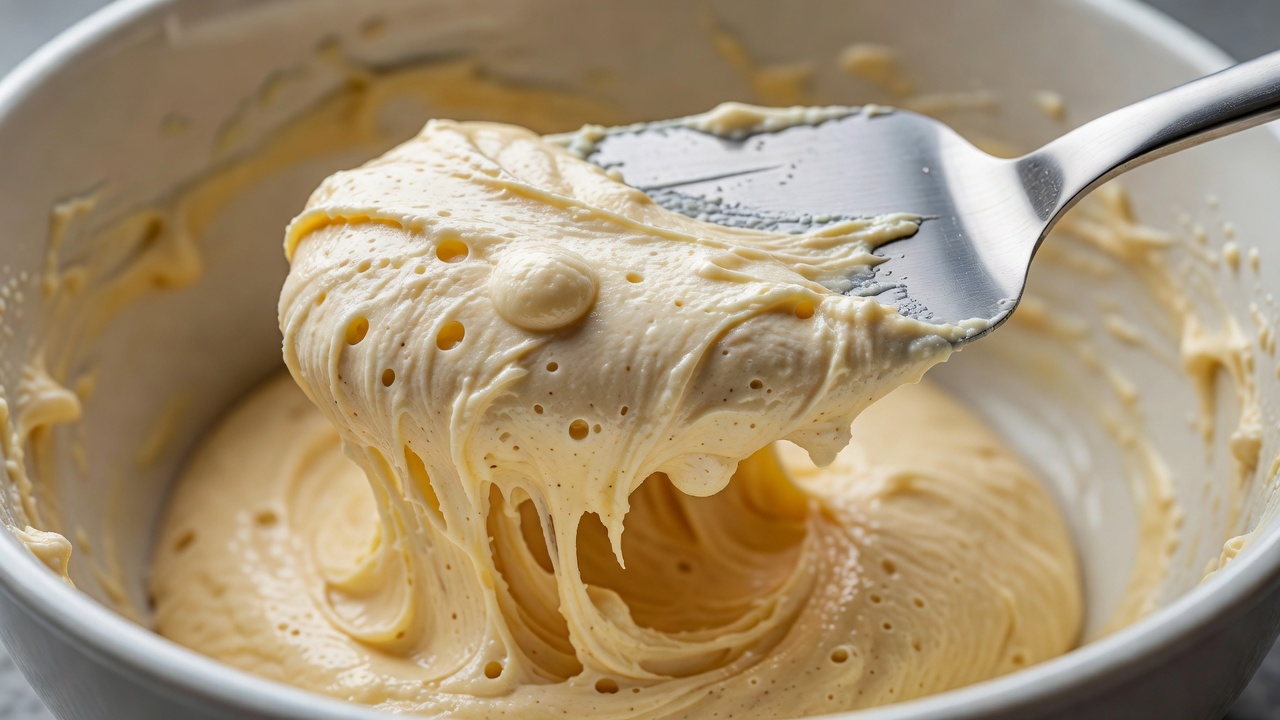
2. Fold to an observable endpoint
Pour the wet mixture into the dry mixture. Use a flexible spatula to scrape down the side, sweep across the base and turn the batter over itself. Rotate the bowl as you work. This movement reaches hidden flour without repeatedly beating the already hydrated batter in the middle.
Stop when you can no longer find loose flour or dry pockets. Small lumps may remain, especially in thicker batters. A rigid stroke count is not reliable because bowl shape, batch size, tools and batter consistency differ. Look beneath the surface once or twice; flour often collects at the bottom edge of the bowl.
3. Add inclusions with restraint
Have fruit, nuts or chocolate ready before the final folds. Add them when only a few flour traces remain so that their distribution and the last stage of hydration happen together. Very juicy fruit, large frozen pieces and heavy additions can change setting and rise independently of mixing.
If the recipe calls for a batter rest, follow its timing. Resting can hydrate flour and change viscosity, but leavening systems behave differently. Do not introduce a long rest into every recipe on the assumption that it always improves the dome. Keep the rest consistent when comparing batches.
4. Portion consistently
Distribute the batter evenly among the specified number of wells. A scoop helps, but weighing a few portions gives a clearer check. Portion differences can masquerade as oven problems: a smaller muffin may be dry while a larger neighbour remains underdone. Clean stray batter from the pan surface before baking.
Place the pan where the recipe directs, usually with space for air circulation. Avoid opening the door early to admire the rise. Once the structure is further along, assess colour and doneness together. A dark surface is not proof that the centre has set.
Read the cooled result
Cool the batch before comparing the crumb. Split a muffin vertically and note cell size, tunnels and resistance to tearing. Long channels with a firm texture can point toward excessive mixing, but they are not a definitive test. Batter stiffness, leavener level and oven conditions also matter.
For your next batch, change only the mixing endpoint while keeping the formula and baking conditions steady. Record whether loose flour was eliminated, whether the batter became elastic and how the cooled crumb felt. Avoid deliberately underbaking one batch to make it seem more tender: that changes the question you are testing.
Mix to combine the ingredients. Use the cooled crumb to judge whether your method needs refinement.