A muffin offers several places to build flavour: the base batter, distributed inclusions, a concentrated filling and the surface. Those layers should work together. A rich chocolate base may benefit from a little salt and a restrained finish rather than another intensely sweet layer. A gentle vanilla crumb can carry fruit without needing several competing spices.
Choose one dominant flavour and a supporting contrast. Think in terms of aroma, acidity, sweetness, bitterness and texture. This makes the result easier to assess and reduces the temptation to correct a bland base with an increasingly heavy topping.
1. Season the batter intentionally
Disperse ground spices in the dry ingredients so that they do not remain concentrated in a few bites. Citrus zest contributes aromatic oils without the same water load as juice. When a recipe uses the technique, rubbing zest into sugar helps distribute those oils. Avoid including the bitter white pith when the aim is a clean citrus note.
Salt supports flavour balance, but its perceived intensity depends on the whole formula. Use the recipe’s specified salt and measurement guidance. Different crystal shapes can pack differently by volume, so switching salts without checking weight can change the result. Evaluate flavour only after the muffin has cooled enough for the crumb and aromas to settle.
2. Control inclusions and fillings
Chop nuts and fruit to a size the surrounding batter can support. Large pieces create local interruptions in the crumb and can make portions bake unevenly. Toasting nuts can deepen flavour, but let them cool before folding them into the batter. Hot additions can change the temperature and consistency of the mixture.
Fresh and frozen fruit behave differently. Follow the recipe’s guidance on whether frozen fruit should remain frozen. Thawing releases liquid, and simply pouring that liquid into the bowl changes the formula. A light flour coating may reduce surface wetness in some situations, but it does not reliably prevent sinking in an overly thin batter.
A central spoonful of jam or another filling adds concentrated water and sugar. Use a formula designed to accommodate it, keep the filling away from the pan walls where instructed and avoid overloading the centre. A thick-looking filling can still loosen considerably in the oven. Test doneness in the surrounding crumb rather than interpreting the filling on a skewer as raw batter.
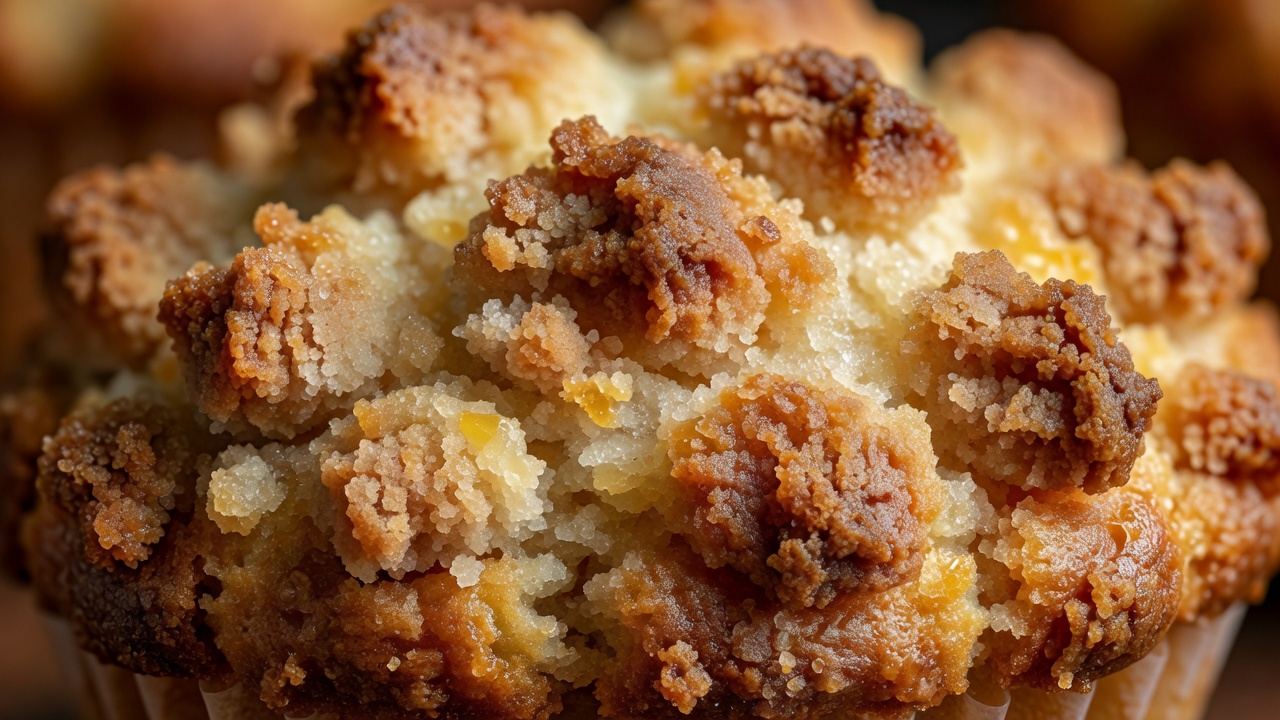
3. Match the topping to the bake
Streusel is a separate mixture with its own balance of flour, sugar and fat. Too much fat can encourage spreading; very fine crumbs may disappear into a wet surface. Follow a tested topping formula before improvising its proportions. Keep the crumb size reasonably consistent so that exposed pieces brown at a similar rate.
Apply a baked topping when the recipe directs. A heavy layer can restrain expansion or leave the batter beneath it slow to set. If the topping browns too quickly, investigate oven conditions and its sugar content rather than assuming that every batch needs more baking time.
4. Finish after cooling when appropriate
A simple glaze behaves differently from streusel because it is generally applied after baking. Let the muffin cool when you want the glaze to remain visible rather than melting into the surface. Add liquid gradually to the glaze and judge how it falls from a spoon; exact consistency depends on the intended finish.
Acidic juice can balance a sweet glaze, but a glaze cannot repair a structurally gummy muffin. Taste the base on its own before deciding how much finish it needs. If the crumb already contains sweet fruit and chocolate, a thin drizzle may offer enough contrast without covering the whole surface.
Plan storage around the filling
Texture and safety both matter after baking. Crisp toppings soften as moisture migrates from the crumb. Refrigeration can change the feel of butter-rich muffins, yet a perishable filling may require it. Follow reliable recipe-specific storage guidance for cream cheese, custard and other sensitive components instead of applying a universal room-temperature rule.
For your first trial, keep the base formula unchanged and test one addition or finish. Record its amount, size and placement. Cut through a cooled muffin to see whether the addition stayed distributed and whether the surrounding crumb set evenly. That cross-section is more informative than judging the dome alone.
A good finish makes the intended flavour clearer. It does not need to make every bite louder.